Check out my interview here.
The Death Writer: Monday Mourning: The Death of a Father: I like to break things and put them back together in a random, yet tasteful, order. I am the author of the nonfiction book Let Me Eat Cake:...

Monday, August 26, 2013


Wednesday, August 14, 2013
divots
My breasts
are too big. Professionals from
the age of 11, they skipped their training and went right to the C cup.
 When I flash
on growing up with my breasts, I remember mostly humiliating things: my
piss-yellow gym uniform gaping at the snaps; the obvious size discrepancy
between the two as revealed by the green Speedo I wore for swim practice and
meets every day of the summer for all my high-school years; being called Moose
Miller, after the comic strip, by two boys in the sixth grade who had not
learned to like breasts yet—or they had and simply acted as boys in the sixth
grade do (which, come to think of it, is not unlike the way many men do).
Perhaps my most vivid recollection is standing naked in front of a male plastic
surgeon as he took pictures of them during a consultation for a breast
reduction that I never had.
When I flash
on growing up with my breasts, I remember mostly humiliating things: my
piss-yellow gym uniform gaping at the snaps; the obvious size discrepancy
between the two as revealed by the green Speedo I wore for swim practice and
meets every day of the summer for all my high-school years; being called Moose
Miller, after the comic strip, by two boys in the sixth grade who had not
learned to like breasts yet—or they had and simply acted as boys in the sixth
grade do (which, come to think of it, is not unlike the way many men do).
Perhaps my most vivid recollection is standing naked in front of a male plastic
surgeon as he took pictures of them during a consultation for a breast
reduction that I never had.
From my teen
years on, I often slept in a bra when I had my period, and my breasts spent the
majority of my pregnant nights in a much larger one. They are the first body part to gain weight, and they are
the last to lose it.
My sister,
my husband, and many of my girlfriends regularly point out their size to me, as
if they are separate entities controlled by remote, which I use to inflate or
deflate them at will. Some people,
mostly men, talk to them instead of my nice eyes.
Last year's
mammogram hurt so much that, despite my having lymphoma and needing to do
regular cancer screenings, I postponed this year's mammogram by more than four
months. And this one, performed two weeks ago, hurt so much that they still throb
from the crushing.
 What bothers
me most about my breasts—more than ill-fitting tops and now-wrinkled cleavage
and soreness and wires poking into my ribcage for thirteen hours a day (even
now, as I sit in my bed and compose this sad ode to them)—are the divots in my
shoulders, the permanent cuts in my bones.
What bothers
me most about my breasts—more than ill-fitting tops and now-wrinkled cleavage
and soreness and wires poking into my ribcage for thirteen hours a day (even
now, as I sit in my bed and compose this sad ode to them)—are the divots in my
shoulders, the permanent cuts in my bones.
Nothing,
save a fluffy pillow, could have stopped the elastic straps from cutting
grooves into my shoulders. Surely not fatter straps, which would have likely
caused fatter grooves. I couldn't have chosen no bra or a strapless bra or even a racer back, which would have simply
moved the groove closer to my neck.
During the eighties, however, I reduced the discomfort and the cutting
effect by placing my shoulder pads under
my bra straps. Alas, shoulder pad
style was short lived and never made a comeback—unlike bell bottoms, hip
huggers, and tube tops. (That I couldn't wear a tube top is probably the most
positive result of my breast size.)
In the
summer, my divots are most visible. Though the swimsuit straps should fit
nicely into the grooves, where they will stay put and are not subject to
sliding down, my breasts are too heavy to stay put. A length of yarn ties the straps together at the back to
hold me up.
Most of the
time, no one sees my physical deformity except for my husband, my daughter, and
a random friend for whom, when I want sympathy, I will occasionally yank over
my shirt and slip down my bra strap. But I can see it. More important: I can feel it.
Friends joke
sometimes when they hear I'm thinking again about a breast reduction. "You
can give me what you don't want," one woman says; another replies,
"Maybe we can split it!"
I feel a
little like a traitor now, having spent the last 600 words dissing the girls,
both of whom have served me well in a few of life's most important arenas. Despite the abnormalities and the pain
and the disfigurement they've caused me over the years, I don't hate them
nearly as much as I hate my ankles.
I write
about my breasts and my struggles with the consequences of their size because I
get a little weary of the insensitive messages sent by deceptive advertisers
and well-meaning friends alike. Every day, someone posts a so-called positive,
uplifting message about how wonderful our bodies are and how we should love
them and not fall prey to Madison Avenue's unachievable lingerie-model
standard.
Our feelings
about our bodies go far deeper than what we look like in the mirror. I don't know which is more
insulting—the notion that beauty is a size 0 or the impression that I am so
shallow that I would reject my body parts because of their appearance alone—or
that appearance doesn't also hinder function.
So I'll say
it: I don't love my body. I sometimes
don't like it. But every day, I
stuff parts into fabric contraptions and make the best of what works and what
doesn't. And my relationship with those parts is an intimate, personal one
(though it's not, now, a private one) influenced by gym teachers and doctors
and parents and lovers and children and friends and bullies and disease and
books and music and, yes, advertising, because we don't live in a vacuum.
Like America
itself, the motto of the body should not be "love it or leave it." It
should be "love it or try to make it better." And that's probably what most of us do.
Tuesday, June 18, 2013
the work of art

The function
of your organs is not dependant upon a Picasso centered above the sofa. You
will, indeed, breathe without a bound set of pages filled with well-constructed
lines of words about a wheelbarrow and chickens. Your heart will beat, albeit more slowly and evenly, without
having ever heard the greatest rock and roll song of all time—whether that song
is Hendrix's version of "All Along the Watchtower" or Zeppelin's "Stairway
to Heaven" or Springsteen's "Born to Run." You certainly don't need
movies to make your blood flow.
But try living without art. You can't. I am willing to bet that not a single room in your house, including the bathroom, is devoid of it in some form.
But try living without art. You can't. I am willing to bet that not a single room in your house, including the bathroom, is devoid of it in some form.
In my small bedroom, I have eight original paintings, a mosaic, a silkscreen, a
print, a photo, two lithographics, and a blown-glass vase made by an artisan.
Some were gifts; some were purchases; some are the work of my daughter or me.

These are
the things I value not only because they bring me joy when I look at them, but
because I know how much heart went into them, how much work.
When we buy something from an artist, sometimes what we pay for is the time
spent on that single piece, but most often we pay for education, experience,
practice, tools, materials, inspiration, and all the things that led to the
creation of that piece of art.
It's the
same thing with accounting. You pay not only for someone to prepare your taxes;
you pay for the education that taught the preparer. You pay for a roof and
walls and materials and utilities.
So a
photograph, simple as it seems, is not just a quick capture of a moment in
time.
 The other
day, I took a walk down the street with a friend to shoot some of the pretty
flowers we saw on the way home from dinner. I grabbed my camera and two lenses—about $3,500 worth of
equipment—and we spent about 30 minutes walking, examining the flowers,
composing our shots, and pressing the button that seems to determine the
photo's value in the minds of some.
The other
day, I took a walk down the street with a friend to shoot some of the pretty
flowers we saw on the way home from dinner. I grabbed my camera and two lenses—about $3,500 worth of
equipment—and we spent about 30 minutes walking, examining the flowers,
composing our shots, and pressing the button that seems to determine the
photo's value in the minds of some.
My card had
more than 60 images when I returned. I previewed each, selected the ones I
thought had potential to be beautiful, and went to work. While flowers are pretty without
makeup, my goal is to convey something more than an exact two-dimensional
replica of a three-dimensional flower. I want to show you a world, a place you
don't often notice. I want that picture to swallow one of your breaths.
The
beautiful zinnia you see at the top of the page didn't look exactly like that
in my camera. It was planted in a box in front of a neighbor's house, and you
could see a blurred-out background of mortar and brick, but it was a little too
pronounced for my liking. When you're looking at a flower, you're looking at
the flower; the background shouldn't detract. So I blew up the bloom.
Next, I adjusted the color, clicked the Auto Tone button, adjusted the color again, clicked the HDR button and fiddled with those adjustments, pasted the previous version on top of the HDR version and erased the parts I wanted crispier before merging those two images.
Next, I adjusted the color, clicked the Auto Tone button, adjusted the color again, clicked the HDR button and fiddled with those adjustments, pasted the previous version on top of the HDR version and erased the parts I wanted crispier before merging those two images.

Finally, I add a watermark in an inconspicuous place—not because I want to protect the image from theft (anyone with an iota of initiative can blot or crop out my watermark) but because it's mine. I sign my work. It's a pride thing. I didn't spend thirty minutes editing a single photograph so that my picture could be another of the millions of anonymous images floating around without attribution.
Sometimes I'll post that photo on my Flickr or Facebook page. If you like it, you will leave me a comment saying it's beautiful. But the truth is that I want you to buy it. I want you to hire me to shoot your kid's senior portrait or the headshot for your new book or your party.
And when I
tell you that I charge $250 to $350 for a one-hour photo shoot, which includes
25 to 50 images on a DVD, you should understand that I took eight times that
number and that each of those 400 images was scrutinized, that the final images
were each opened and tweaked, that zits were blotted out, that skin was smoothed,
that, ladies, your mustache was softened, your eyes were made to sparkle more,
your tie, gentlemen, was enhanced.
What you get is hours of work that's hard on the eyes and the hands and
the neck.
I want you
to find the exchange of art for money a valuable, mutually beneficial one that
will bring you joy for years to come.
So even though I have that photograph lying around, collecting pixels, taking up disk space, it's not free. My name and a link to my website are not a fair exchange for the work that makes a work of art.
I don't work for free. Period.
So even though I have that photograph lying around, collecting pixels, taking up disk space, it's not free. My name and a link to my website are not a fair exchange for the work that makes a work of art.
I don't work for free. Period.
Monday, June 10, 2013
the magnitude
My father
would have been 76 today.

One of the
biggest challenges about my father, second only to being a passenger in the car
he was driving, was buying him presents.
Usually,
we'd combine his birthday gift with his Father's Day gift to save ourselves the stress. Because
he was so thoughtful with ours (he'd call a month before our birthdays,
when we were cooking dinner or doing homework, expecting an immediate answer to
the question of what we'd like him to buy us), we always wanted to get him something
special, memorable, useful—more out of love than obligation.
Every so
often, we'd get a good idea, and we'd milk that for as long as we could.
Because my dad owned a paving company, and because alligatoring
was a thing that happened to asphalt, we started an alligator collection for him. He'd smile at the inside joke and set
the paving stone or paperweight or bottle opener or sculpture or mosaic down on
the table, and my mom would find a place for it.
 The rest of
it—bathrobes, sweaters, ties, socks, wallets, money clips—stayed in their boxes
for years because he didn't need anything. There was a good shot he'd wear it if it had a horse on it,
though, so we'd bought him a rainbow of Polo shirts, beach towels, shorts, and enough cologne
to drown a polo pony.
The rest of
it—bathrobes, sweaters, ties, socks, wallets, money clips—stayed in their boxes
for years because he didn't need anything. There was a good shot he'd wear it if it had a horse on it,
though, so we'd bought him a rainbow of Polo shirts, beach towels, shorts, and enough cologne
to drown a polo pony. Sometimes we'd buy him gift certificates that he'd lose under the seat of his car or CDs he wanted but which still had the shrink wrap on them when he died. The things he treasured the most were the XXL sleep shirts with his grandchildren's photos ironed on them. In fact, Beth would pay for the shirts and transfers, and I'd take the pictures and do the ironing.
The last few were a large. We took them to the rehab center on Christmas, and he cried. I'd only seen him cry maybe one other time in my life, and that was when his father died. I'm wearing one of those shirts now, a photo of Serena kissing Marcus. My dad never got to wear it.
Today is
like the last mile of firsts: first birthday without him, first Father's Day
without him, and, in 25 days, it will be the end of the first year without him.

On July 5th,
the anniversary of his death, I expect to ooze hot lava for three days, until
the headstone unveiling on the 7th, when I will be done erupting and will begin
to cool down. I might have a
little residual steam, but I'll probably be safe for the tourists.
Yeah. It's
going to happen just like that.
Wednesday, June 5, 2013
don't work for free. period.
 Your toilet is clogged, and you've called a plumber. "Is this Bob the Plumber? Yes, I have a clogged toilet. I want you to come and fix it. In exchange, I will put a sign out on my lawn for the whole time you're here that says you are upstairs fixing my toilet. The sign will have your phone number on it. When you're finished, the sign will stay around, but it'll probably go behind the tree-trimmer's sign."
The plumber is delighted. He needs the 30 minutes of free publicity on your low-traffic street.
Can't imagine that scenario? Substitute photographer (or writer or artist) and link to your website for plumber and sign. Not so far-fetched anymore, is it?
In fact, you can substitute just about any kind of artistic endeavor for any kind of service or product; the analogy is perfect.

Artists are not rich. Our art is relegated to hobby status because we can't afford to pay our children's school tuition and our car payments with all the generous links to our websites.
A few years ago, I was asked to donate a large mosaic sculpture for an auction benefitting cancer patients. The woman who solicited the request was being paid to organize the event. The winning bidder was getting my art. And I? I would not be getting paid. The entire charity event was on the backs of the artists, the people who could least afford to donate to charity.
What about artists requesting art from each other? A friend once asked me to do some design work. If this project took off, he told me, then he'd have a lot of money to hire me for the big design jobs later. And when that time came, he said he went with a professional designer, one who would never give away her work. Since that day 25 years ago, my policy is this:
I will trade something of value to you for something of value (usually money) to me.I bring this up because I received a request for a photo. I get maybe a dozen each year, but each is irksome. I want to share this exchange with you.
Hello. My name is [Name] and I work for [Website.com]. First of all, your work is incredible. I was wondering if we could use this photo (see link below) for one of our blog posts. We will give you credit for the image and link back to your page. Please email me with your answer.

Thanks,
[Name]Here's my reply:
First of all, thank you for the compliment on my work. I have been taking photographs since I was a little girl. I developed my own film and printed photos in high school, and I grew up to take professional portraits and other artistic shots.
 |
| My first self-portrait, ca 1977, shot, developed, and printed by me. |
Here's my thought: I want ten bucks for the photo, and it's not the money; it's the principle. I know you can get a free photograph from the next person—someone who wants to self-promote or add publishing credits to his or her résumé. But I don't need either of those.
Art takes time and costs the artist money. (My camera and one lens were more than three grand.) So why shouldn't it cost the patron money?
Look: you will pay someone to fix the toilet, massage your feet, and shampoo your hair. Would you ever expect someone—a stranger, no less!—to do those services for free? Would the plumber unclog your sink for a sign on your lawn that says he's working on your bathroom? What about shopping: could you walk into a grocery store and get free bananas? Or get a free shirt from Macy*s?
If I got a link back to my website, would the next person ask me for a free photo, too?
So ten bucks, my name (Leslie F. Miller), and a link to my photo site (www.lesliefmiller.com). If you think that's a fair deal, you can send me some PayPal cash, and I'll send you a high-res image.
:-D
Leslie
I don't recommend asking for $10. In fact, I usually ask for $50 from non-profits and $100 from for-profit companies (though it's hard to tell the difference), but this would've been for one blog post, its life cut short by a flurry of new posts in short time. (Just in case you think non-profits are somehow more worthy, remember that the Directors and CEOs of large nonprofits make hundreds of thousands a year. The small ones don't, but they do pay their employees and buy office supplies! They can afford $50. They can afford $10 for a blog photo.
Here is her reply:
Leslie,
As much as I understand (and agree) with your request, I'm only an intern working for a (non-profit) company/website who cannot afford to pay for the use of photos right now. For that reason, I'm going to have to pass on your kind and fair offer. However, I do encourage you to hold tight to your decision (as I am also a photographer -- amateur, but even so -- and understand completely what you mean).
Thank you so much for your reply! I wish you all the best in your photographic endeavors.
Sincerely,
[Name]

Ask your excellent dentist if you can, instead of paying her, hand out her business cards every time someone compliments your teeth! Ask your ingenious accountant if, instead of paying for having your taxes prepared, you could put a magnetic sign advertising his services on your car during tax season. Hey, wait! Don't tip the talented shampoo girl! Wear her name on a barrette in your just-washed tresses.
Have I ever been paid for a photograph? Yes! But no one who has ever written to request a handout has ever changed his mind. And that's fine with me. Because the people who write to ask for photos with a check in their hands are the places where the publicity will matter. And the big corporations who ask for handouts can suck my—well, this has been a family-friendly post, so I'll keep it that way.
Bottom line: hold fast to your principles. You retain so much more than those: you keep your integrity and your rights. Best of all, you do it for all artists—the photographer, the painter, the writer, the digital artist, the musician (!), the sound man, the composer, the actor. You do it for everyone, really.
If you want to give your artwork as a gift, your deserving friend will certainly appreciate that! (I do! We do!) Birthdays, anniversaries, weddings, graduations—these are the perfect opportunities to share your art with them. But remember that even the paintings and photos hanging on the walls of your friends' homes and offices were, for the most part, paid for. Let them pay you, too (a little less; they're friends, after all).
Share this public service announcement with everyone you know. And don't work for free. Period.
If you like what you read here, buy one of my books: BOYGIRLBOYGIRL; Let Me Eat Cake: A Celebration of Flour, Sugar, Butter, Eggs, Vanilla, Baking Powder, and a Pinch of Salt.
And if you're still giving your work away, you're responsible for this: Save the Sun-Times Photojournalists.
Edited to add the following note from a reader:
Is writing a blog working for free?
No. It's working for yourself. You're trading something of value to you for something of value to you. Your name is on it. You're not promoting the services or products of anyone but yourself. In other worlds (and words), it's called "advertising."
Friday, April 12, 2013
unguessed miseries (reprise)
Tonight, in my kitchen, we reminisced with friends about our camping experiences and remembered, many of us incorrectly, a night that featured a bloody t-shirt. My daughter observed that I'm always sick while traveling, and I defended myself. This is better.
- - - - - - -
...Who would spaniels fear,
Or strays trespassing from a neighbor's yard,
But that the dread of our unheeded cries
And scratches at a barricaded door
No claw can open up, dispels our nerve
And makes us rather bear our humans' faults
Than run away to unguessed miseries?
Thus caution doth make house cats of us all....
~Henry Beard (uncertain), "Hamlet's Cat's Soliloquy"
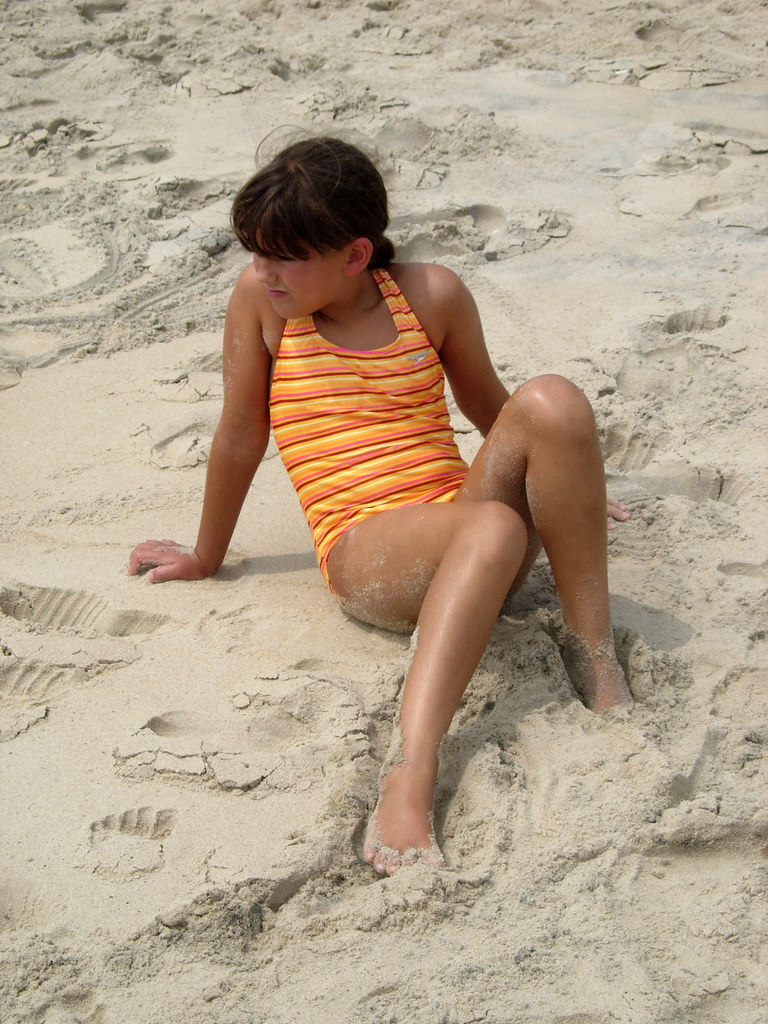
Summer is no time for a worrier and mom. Knees are skinned, eyes are blackened, skin is rashed and burned, sweet ears are filled with trapped pool water. In summer, mothers lose their boys—mostly boys, daredevils—to riptides and high cliffs at forbidden swimming holes, their girls to cars racing down the quiet street; lose their children to strangers who pluck them off a corner, lose them to their fathers.
Forget the pair of great egrets fishing in the river, the snapping turtles mating under the bridge, bobbing in the hydraulic. Never mind the whole world come alive with chirps and clicks and calls, whoosh of sprinkler, bounce of diving board, roar of mower—sounds so comforting they could lull grown insomniacs to sleep with the promise of their parents’ protection from everything evil in the world.
Summer is my season of unguessed miseries.
I used to be a competent traveler. By no means was I the kind of girl who wanted to veer off the beaten path, head out on a dirt road in Mexico in a rickety ride with a Spanish map, meander the Escalante wilderness for a week with only what I could carry on my back. Still, I am a good hiker, and I like to mingle with the locals, get a more authentic travel experience than the typical tour-bus tourist. But I need the stability offered by a nearby pre-pitched tent, a toilet with walls and a ceiling to help keep the flies out, a base camp with a four-wheeled, gas-fed sentry beside a wood post with a number. "Please send help to number 28," I could say into the cell phone I use for emergencies.
A few years ago, while camping in just such a place with friends at Cunningham Falls State Park, we heard loud voices in the night—a big fight at a site not too far from ours. It came and went quickly, ending with a loud pop and squealing tires. In the morning, we found a bloody t-shirt draped over the sign. Please send police to number 28.
I don’t travel well now. When my daughter was born, I began sleeping less and worrying more. My first couple of vacations without her found me panicked about dying on a flight to my camping vacation in Utah, dying in a fall from a high cliff in Zion, dying from an axe murderer in the woods at Dixie National Forest. I worried a little about my daughter, too—being away from me, getting inferior care from my parents—who knew nothing about raising a girl, after all. Mostly I concentrated my fears on my own early death, worried that I’d never see my daughter again.
But my husband wants to show her the world, with or without me. He prefers without. He and my daughter first flew out to Utah two summers ago, rented a PT Cruiser, and bounced from park to park for two weeks while I worried, of course, that she’d fall from great heights; that a bad driver would crash into them; that she’d be sitting in the front seat of a vehicle with an airbag (or without one; it hardly matters); that my husband would go to the bathroom, and a stranger would snatch her from a seat in Springdale’s Bit and Spur restaurant.
These are only the guessed miseries, and they are horrid.
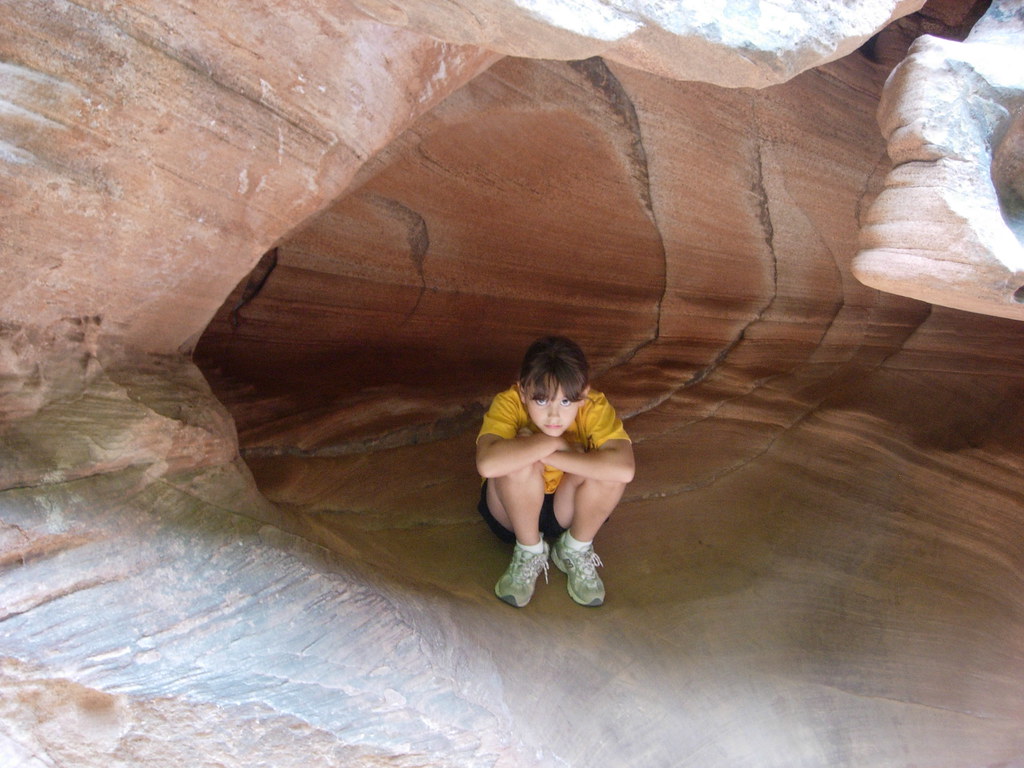
Last year, I decided it would be worse to sit at home and wonder than it would to join them, sleep or no sleep. And so my daughter and I flew to Vegas and then took a bus to St. George, not too far from Zion, Utah. The first thing I told my husband, who had driven an hour or two to pick us up, was that he smelled bad, and that set the tone for the rest of the trip. Traveling with my family, which I have done in past years (we have taken camping trips to New Hampshire’s White Mountains and New York's Finger Lakes, with success), was not such fun this time. My daughter didn’t want to hike and complained a lot about the heat. My husband was already disappointed with me. I took sleeping pills every night, got a wicked sunburn at Lake Powell, then lost my mind at the grocery store, when my daughter disappeared from my side; I ran up and down the length of the store, screaming her name, then yelled to anyone who would listen that my daughter had been stolen. When I found her, I felt mortified and said an awful thing that I have blocked from my memory.
This summer, my husband and daughter have been planning another trip without me—filled, I’m certain, with all kinds of unguessed miseries—to California, by Ford truck. It’s a long drive, over 3,000 miles, and so they’d need to be gone at least a month to make it worth their trouble and keep them from spending half of the time in the truck. I have dreaded it for every moment since just before the summer began (though their departure date seems to change with each passing hour).
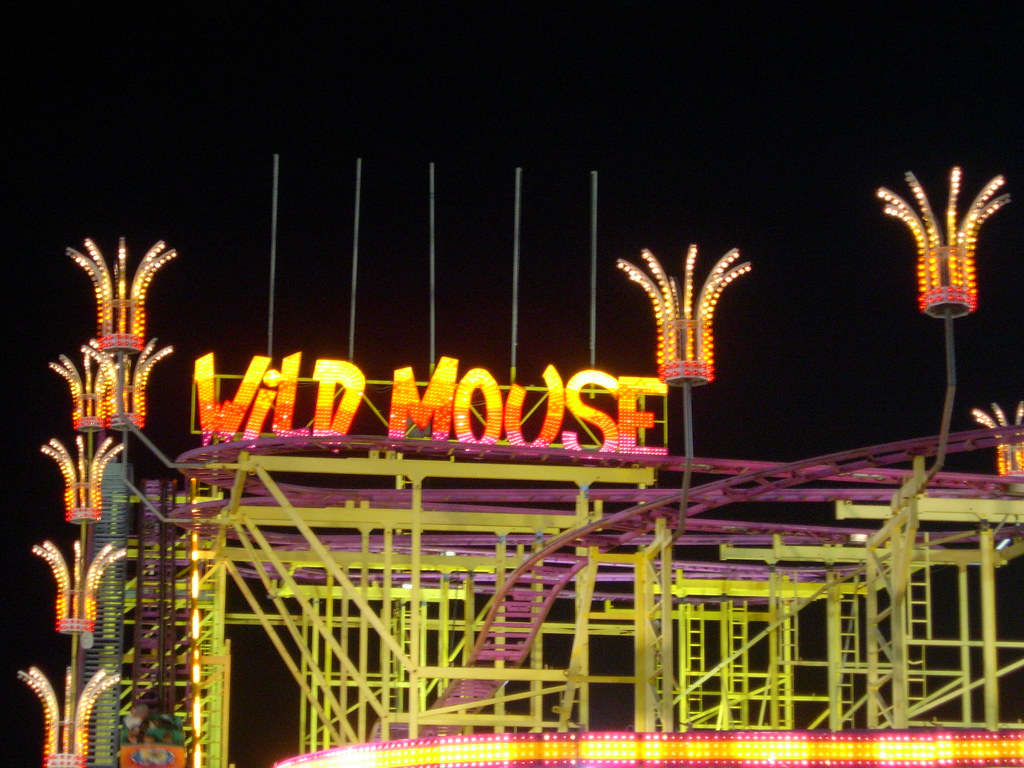
It’s all my daughter has talked about for months—going to California to see the redwoods (and having her own spending money—a bill in each denomination from one to one hundred). My husband has told her the redwoods are something special, so big you can fit a restaurant in one. He has talked it up, made it this thing between them that I cannot penetrate, try though I may with a weeklong trip to the ocean to do her favorite things like ride the Wild Mouse, play mini-golf, collect seashells. The other trip, the great trip, still looms in the background, with it’s big, left-coast promises, my daughter’s personal Gold Rush. And when I get home, I am going to California to see the giant redwoods, and I will have $188 to spend, so I can buy you a shirt.
It’s possible they won’t go to California; heaven knows I have wished for it, as if a trip North, instead of West, were safer. Certainly it is less threatening than a whitewater gorge, echoic red rock canyons, and peaks that can only comfortably hold only one of those angels perched atop the head of a pin. And maybe I will have a shot at being the hero of my daughter’s summer with a trip to the mundane shore, which included a hot fudge sundae crepe for breakfast, a box of Bertie Bott’s Every Flavored Beans*, and a box of three of Tim Burton Tragic Toys for Girls and Boys.
My great wish is to be normal, myself again, less afraid of airplanes and highways, cliffs and snakes, to worry less about where and how I will sleep and for how long, to travel with my soul mate and my heart and even my own soul like I did when my husband first took me out west in 1985, when I could still view the world with wonder, when driving cross country for a month—just the two of us in a Ford Escort wagon with no AC—was luxurious, and when his company was all the company I needed.
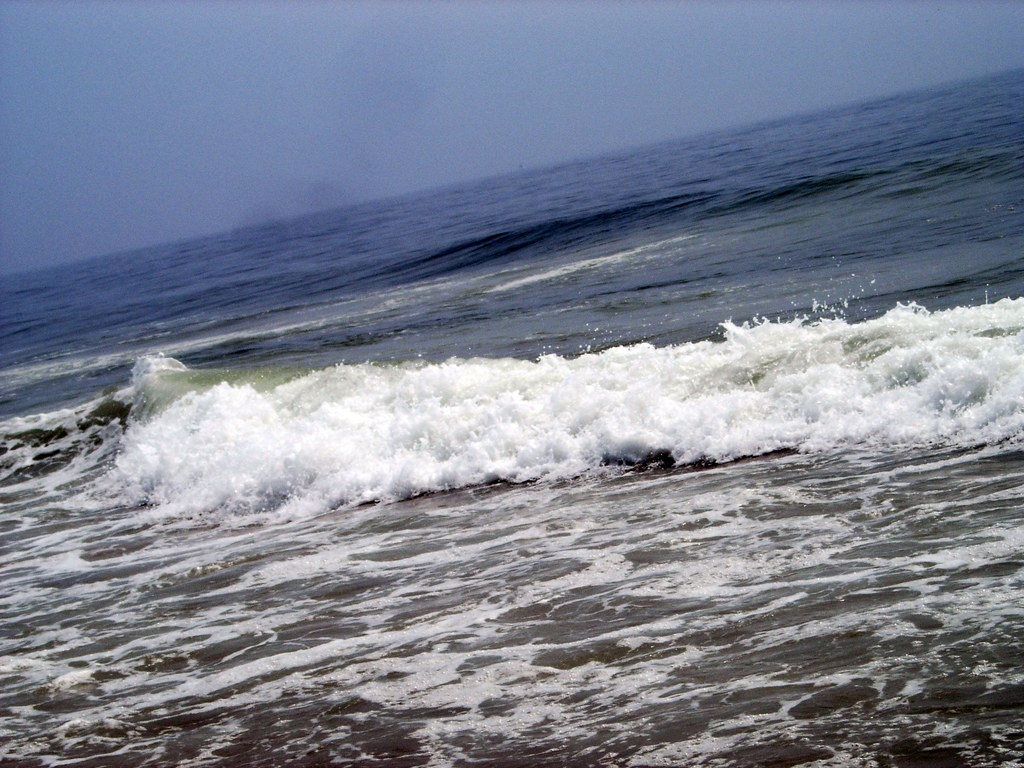
I have spent most of this summer tapping my foot and nervously waiting to hear their travel plans. My stomach sinks when I see the road atlas spread like a blanket over the kitchen table. The camping gear taunts me with its slightly ajar top. When they go, I will bite my nails and pray for summer to rush out like the undertow and the start of school to rush the Atlantic shore. Because when summer is over, when my daughter once again spends her days in the school where her father works, my biggest worries will be how she does on the spelling test and whether she is eating, from someone else’s lunch, a snack item that contains high-fructose corn syrup. I will wonder, too, who might kiss her in the coat room or call her names at recess or give her strep throat.
But all the unguessed miseries of fall, winter, and spring combined are no match for even the guessed miseries of summer.
· · · · · · · · · ·
*Yes, the disgusting flavors do, really, taste like their namesakes; I tried both Dirt and Sardine, much to my shock and horror.
- - - - - - -
...Who would spaniels fear,
Or strays trespassing from a neighbor's yard,
But that the dread of our unheeded cries
And scratches at a barricaded door
No claw can open up, dispels our nerve
And makes us rather bear our humans' faults
Than run away to unguessed miseries?
Thus caution doth make house cats of us all....
~Henry Beard (uncertain), "Hamlet's Cat's Soliloquy"
Summer is no time for a worrier and mom. Knees are skinned, eyes are blackened, skin is rashed and burned, sweet ears are filled with trapped pool water. In summer, mothers lose their boys—mostly boys, daredevils—to riptides and high cliffs at forbidden swimming holes, their girls to cars racing down the quiet street; lose their children to strangers who pluck them off a corner, lose them to their fathers.
Forget the pair of great egrets fishing in the river, the snapping turtles mating under the bridge, bobbing in the hydraulic. Never mind the whole world come alive with chirps and clicks and calls, whoosh of sprinkler, bounce of diving board, roar of mower—sounds so comforting they could lull grown insomniacs to sleep with the promise of their parents’ protection from everything evil in the world.
Summer is my season of unguessed miseries.
I used to be a competent traveler. By no means was I the kind of girl who wanted to veer off the beaten path, head out on a dirt road in Mexico in a rickety ride with a Spanish map, meander the Escalante wilderness for a week with only what I could carry on my back. Still, I am a good hiker, and I like to mingle with the locals, get a more authentic travel experience than the typical tour-bus tourist. But I need the stability offered by a nearby pre-pitched tent, a toilet with walls and a ceiling to help keep the flies out, a base camp with a four-wheeled, gas-fed sentry beside a wood post with a number. "Please send help to number 28," I could say into the cell phone I use for emergencies.
A few years ago, while camping in just such a place with friends at Cunningham Falls State Park, we heard loud voices in the night—a big fight at a site not too far from ours. It came and went quickly, ending with a loud pop and squealing tires. In the morning, we found a bloody t-shirt draped over the sign. Please send police to number 28.
I don’t travel well now. When my daughter was born, I began sleeping less and worrying more. My first couple of vacations without her found me panicked about dying on a flight to my camping vacation in Utah, dying in a fall from a high cliff in Zion, dying from an axe murderer in the woods at Dixie National Forest. I worried a little about my daughter, too—being away from me, getting inferior care from my parents—who knew nothing about raising a girl, after all. Mostly I concentrated my fears on my own early death, worried that I’d never see my daughter again.
But my husband wants to show her the world, with or without me. He prefers without. He and my daughter first flew out to Utah two summers ago, rented a PT Cruiser, and bounced from park to park for two weeks while I worried, of course, that she’d fall from great heights; that a bad driver would crash into them; that she’d be sitting in the front seat of a vehicle with an airbag (or without one; it hardly matters); that my husband would go to the bathroom, and a stranger would snatch her from a seat in Springdale’s Bit and Spur restaurant.
These are only the guessed miseries, and they are horrid.
Last year, I decided it would be worse to sit at home and wonder than it would to join them, sleep or no sleep. And so my daughter and I flew to Vegas and then took a bus to St. George, not too far from Zion, Utah. The first thing I told my husband, who had driven an hour or two to pick us up, was that he smelled bad, and that set the tone for the rest of the trip. Traveling with my family, which I have done in past years (we have taken camping trips to New Hampshire’s White Mountains and New York's Finger Lakes, with success), was not such fun this time. My daughter didn’t want to hike and complained a lot about the heat. My husband was already disappointed with me. I took sleeping pills every night, got a wicked sunburn at Lake Powell, then lost my mind at the grocery store, when my daughter disappeared from my side; I ran up and down the length of the store, screaming her name, then yelled to anyone who would listen that my daughter had been stolen. When I found her, I felt mortified and said an awful thing that I have blocked from my memory.
This summer, my husband and daughter have been planning another trip without me—filled, I’m certain, with all kinds of unguessed miseries—to California, by Ford truck. It’s a long drive, over 3,000 miles, and so they’d need to be gone at least a month to make it worth their trouble and keep them from spending half of the time in the truck. I have dreaded it for every moment since just before the summer began (though their departure date seems to change with each passing hour).
It’s all my daughter has talked about for months—going to California to see the redwoods (and having her own spending money—a bill in each denomination from one to one hundred). My husband has told her the redwoods are something special, so big you can fit a restaurant in one. He has talked it up, made it this thing between them that I cannot penetrate, try though I may with a weeklong trip to the ocean to do her favorite things like ride the Wild Mouse, play mini-golf, collect seashells. The other trip, the great trip, still looms in the background, with it’s big, left-coast promises, my daughter’s personal Gold Rush. And when I get home, I am going to California to see the giant redwoods, and I will have $188 to spend, so I can buy you a shirt.
It’s possible they won’t go to California; heaven knows I have wished for it, as if a trip North, instead of West, were safer. Certainly it is less threatening than a whitewater gorge, echoic red rock canyons, and peaks that can only comfortably hold only one of those angels perched atop the head of a pin. And maybe I will have a shot at being the hero of my daughter’s summer with a trip to the mundane shore, which included a hot fudge sundae crepe for breakfast, a box of Bertie Bott’s Every Flavored Beans*, and a box of three of Tim Burton Tragic Toys for Girls and Boys.
My great wish is to be normal, myself again, less afraid of airplanes and highways, cliffs and snakes, to worry less about where and how I will sleep and for how long, to travel with my soul mate and my heart and even my own soul like I did when my husband first took me out west in 1985, when I could still view the world with wonder, when driving cross country for a month—just the two of us in a Ford Escort wagon with no AC—was luxurious, and when his company was all the company I needed.
I have spent most of this summer tapping my foot and nervously waiting to hear their travel plans. My stomach sinks when I see the road atlas spread like a blanket over the kitchen table. The camping gear taunts me with its slightly ajar top. When they go, I will bite my nails and pray for summer to rush out like the undertow and the start of school to rush the Atlantic shore. Because when summer is over, when my daughter once again spends her days in the school where her father works, my biggest worries will be how she does on the spelling test and whether she is eating, from someone else’s lunch, a snack item that contains high-fructose corn syrup. I will wonder, too, who might kiss her in the coat room or call her names at recess or give her strep throat.
But all the unguessed miseries of fall, winter, and spring combined are no match for even the guessed miseries of summer.
· · · · · · · · · ·
*Yes, the disgusting flavors do, really, taste like their namesakes; I tried both Dirt and Sardine, much to my shock and horror.
Friday, March 22, 2013
you move me.

I loved a tree.
Correction: I love the tree, though it's been dead a
long time. And despite the fact that it was chopped down today, its logs hauled away, I will continue to love it.
I met the swamp white oak, which I called "my tree," "favorite tree," and "swamp thing"—at Herring Run Park in the early
nineties, when Marty and I started walking our dog, Beowulf, there. Cleopatra soon came
along, and their baby, Buddha, joined the tribe. Jett and Chance have sniffed around that tree, too. It's a tradition with the park dogs.
I took my baby
there. Just before Serena's third birthday, after 9/11, we were playing at the tree—running
around it, talking, sitting. My
daughter was imitating Diane Rehm, whose show was nearly always on in our car,
especially during the crisis of fear. She picked up a stick and spoke into it: "Mr.
Terrorist," she said in a gravelly voice, "Do you use a credit card or
take your lunch?"

For a few springs in a row, an oriole built her nest in the old swamp oak;
you could see it hanging precariously, seeming to dangle from a limb like a
softball on a string. We kept
looking for that nest long long after the oriole song had abandoned the park for
good.
The tree was the cover of my homemade
chapbook—croetry, which contained all my poems about birds. I watched the tree fill with crows. I watched owls and vultures and hawks
land there.
I used to run at the park, and I took my camera there
regularly, shooting that tree almost every time. I have thousands of pictures of it on my storage
drives. In my Flickr set, my favorite tree: RIP, I have just 38 photos. All these years I thought I was posting too many pictures of that tree, and I didn't post nearly enough.

After my back surgery, I didn't visit it as much as I used to. And a few years ago, some stupid, bored, hateful human, set a porta-potty on fire underneath it and killed my tree. When I saw the damage too much later, I broke down and cried. Red and white warning
signs cropped up around it, and threats were made regarding its removal, but
after a few years, I figured it wouldn't happen. The City only cares for a park when caring is in the budget.
The email came today, though, announcing the deed. And it is done. Marty visited the spot today, but I don't know if I am prepared to face its absence.
This tree has been my only god. I have told it my secrets. I have asked for its guidance. I have loved it as much as any person could have loved a tree.
RIP, Swamp Thing. You made my heart sing. You made so many things groovy.
The email came today, though, announcing the deed. And it is done. Marty visited the spot today, but I don't know if I am prepared to face its absence.
This tree has been my only god. I have told it my secrets. I have asked for its guidance. I have loved it as much as any person could have loved a tree.
RIP, Swamp Thing. You made my heart sing. You made so many things groovy.
Subscribe to:
Posts (Atom)
